Dental Implants
Implant consultations help patients explore durable tooth-replacement options for one tooth, several teeth, or a full arch.
Explore Dental Implants →Chicago Dental Care
Bone grafting may be recommended to preserve or rebuild support in areas where tooth loss, extraction, or other conditions have reduced available bone. Full Smile Family Dentist provides grafting evaluations as part of selected implant and extraction plans.
Treatment recommendations depend on an examination, current imaging when appropriate, medical history, and the condition of your teeth and gums.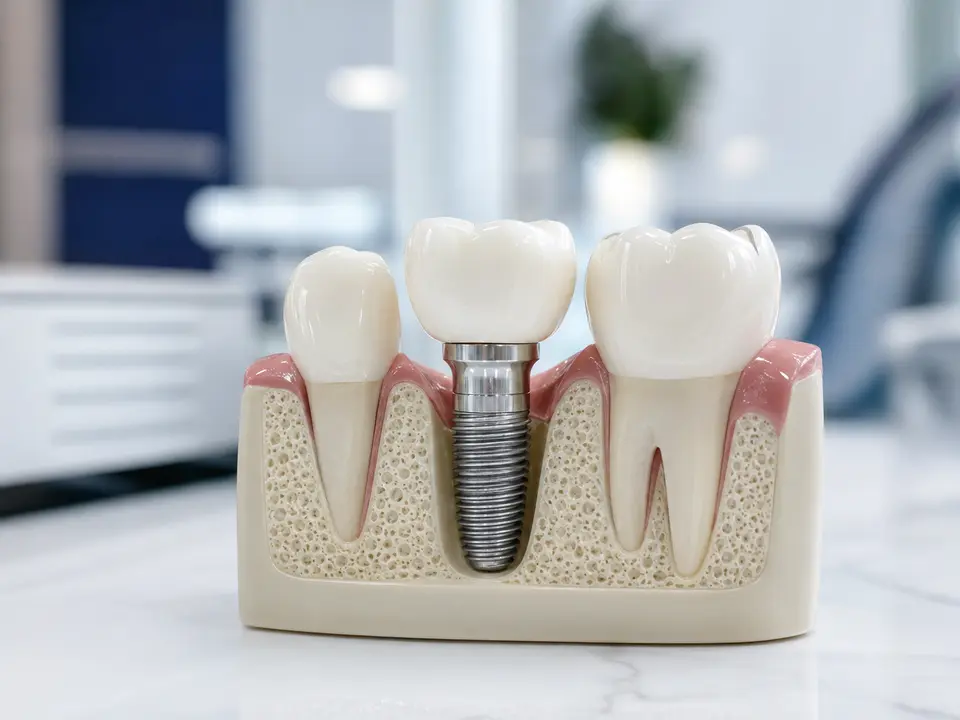
Personalized Dental Care in Chicago
Jawbone changes after teeth are removed because the body no longer receives the same stimulation from the tooth root. The ridge can gradually lose width and height, which may affect future implant positioning or prosthetic support.
Bone grafting uses graft material to support new bone formation or preserve an extraction site. The exact procedure, material, timing, and expected healing depend on the location, defect size, surrounding anatomy, medical history, and treatment goal.
Not every extraction or implant case requires grafting. The dentist uses examination and appropriate imaging to determine whether there is enough native bone for the planned treatment and whether grafting could improve the prognosis or available options.
When Grafting Is Considered
Grafting may be discussed when an extraction site is likely to lose support needed for a future implant, when existing bone dimensions are inadequate for the preferred implant position, or when a localized defect needs reconstruction before or during treatment.
The dentist will explain whether grafting is essential, optional, or unlikely to provide meaningful benefit in your case.
Imaging
For selected implant cases, CBCT imaging can provide a three-dimensional view of bone dimensions and surrounding anatomy. This information can help determine whether implant placement is feasible and whether grafting may be needed before or during treatment.
Healing
Healing time varies with procedure type, graft size, site, health, nicotine use, and other factors. Some implant procedures can be combined with grafting, while other cases require a separate healing period before implant placement.
Follow post-operative instructions carefully and contact the office if symptoms are worsening unexpectedly.
Cost & Coverage
Insurance may cover certain grafting procedures in some clinical situations and exclude them in others. Implant-related grafting is especially plan-dependent. Our team can review available benefits and discuss estimated patient portions and financing options.
Bone Graft Cost
Bone-grafting cost depends on the size and location of the defect, the purpose of grafting, material and surgical requirements, whether the graft is completed with an extraction or implant, imaging needs, and insurance benefits.
Because grafting is not necessary in every extraction or implant case, the dentist first determines whether it is clinically useful. The office can then review the recommended procedure, estimated patient portion, and financing options.
Common Questions
No. Grafting is recommended selectively based on the extraction site, future treatment plan, bone condition, anatomy, and whether preserving the ridge is clinically useful.
Not everyone does. If there is adequate bone for the planned implant position, grafting may not be necessary. Examination and imaging determine the need.
Healing varies by procedure, location, graft size, health, and other biological factors. Your dentist will explain the expected sequence for your specific treatment plan.
Sometimes. In other cases, grafting is completed first and allowed to heal before implant placement. The decision depends on available native bone and procedural stability.
Coverage varies significantly by plan, procedure, and reason for grafting. The office can help review available benefit information before treatment.
Related Care
Implant consultations help patients explore durable tooth-replacement options for one tooth, several teeth, or a full arch.
Explore Dental Implants →When a tooth cannot be predictably restored, an extraction may be recommended with clear aftercare instructions.
Explore Tooth Extractions →Partial dentures replace several missing teeth while using the remaining teeth for support and stability.
Explore Partial Dentures →Plan Your Visit
Review accepted insurance information and explore Sunbit, CareCredit, secure online payments, and other available ways to manage dental treatment costs.
Plan Your Visit
Schedule an evaluation to determine whether bone grafting is relevant to your extraction-site preservation or implant treatment plan.