Dental Crowns
Custom crowns can strengthen, protect, and restore teeth affected by large fillings, fractures, or extensive decay.
Explore Dental Crowns →Chicago Dental Care
Composite fillings can restore selected cavities and damaged areas while blending with the surrounding tooth. Full Smile Family Dentist provides restorative evaluations and tooth-colored fillings at our Chicago dental office.
Treatment recommendations depend on an examination, current imaging when appropriate, medical history, and the condition of your teeth and gums.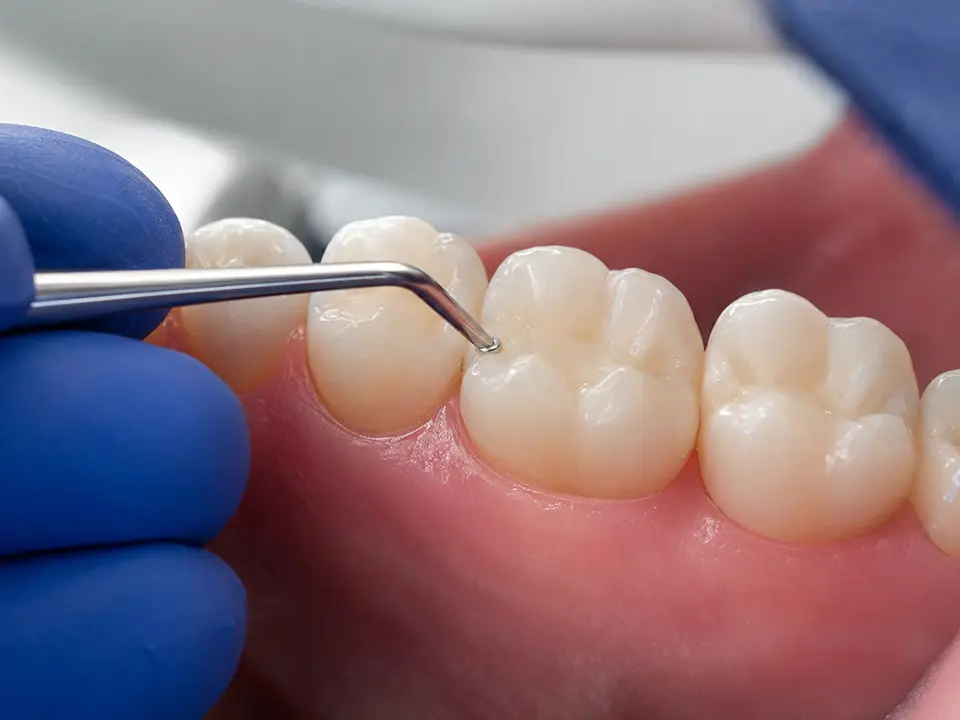
Personalized Dental Care in Chicago
A filling replaces tooth structure lost to decay, fracture, wear, or a failing restoration. Tooth-colored composite material bonds to prepared tooth structure and can be shaped to restore function while matching the surrounding tooth more naturally than traditional metallic materials.
Not every cavity or broken tooth can be treated with a filling. The dentist evaluates how much healthy structure remains, the depth of decay, the location of the defect, bite forces, cracks, and the condition of the nerve. A larger restoration, crown, root canal, extraction, or another treatment may be more predictable when damage is extensive.
The objective is to remove diseased or unsupported tooth structure while preserving as much healthy tooth as practical. After placement, the restoration is shaped, polished, and adjusted to fit the bite.
Cavities
Dental decay weakens tooth structure as bacteria and acids break down enamel and dentin. Smaller lesions may require less tooth preparation than advanced cavities. Once decay extends deeply or undermines a large portion of the tooth, the risk of nerve involvement or fracture increases.
Regular exams and appropriate X-rays can help identify some cavities before they become painful.
Composite Material
After the tooth is numbed when needed, the dentist removes decay or damaged material, prepares the area, and uses an adhesive system to bond composite resin to the tooth. The material is placed and cured in stages, then shaped and polished.
Moisture control is important because composite bonding works best when the treatment area can be kept appropriately isolated.
When a Crown May Be Better
Large fillings can leave remaining cusps or walls vulnerable to fracture. A crown or other protective restoration may be recommended when the tooth has extensive structural loss, a major crack, a very large existing filling, or significant weakening after root canal therapy.
The dentist will explain why a filling, crown, buildup, or another option is being recommended based on the individual tooth.
After Treatment
Temporary temperature or pressure sensitivity can occur after a filling, particularly when decay was deep. If the bite feels high, chewing is uncomfortable, or symptoms are worsening instead of improving, contact the office so the restoration and tooth can be evaluated.
Dental insurance often provides benefits for fillings, but coverage percentages, replacement rules, deductibles, and material limitations vary by plan.
Common Questions
Composite resin is a widely used restorative material. Your dentist can discuss the material, alternatives, and any specific concerns related to your health or treatment.
Longevity varies with filling size, tooth location, bite forces, grinding, diet, home care, and recurrent decay. No filling is permanent, so routine examinations remain important.
Sometimes, but not always. When too much structure is lost or the tooth is cracked or weakened, a crown, buildup, root canal treatment, extraction, or another plan may provide a more predictable result.
Mild temporary sensitivity can occur after restorative treatment, especially when decay was deep. Contact the office if sensitivity is severe, persistent, worsening, or associated with swelling or significant pain.
Many plans cover fillings, but benefits vary by tooth, surface, material, replacement interval, deductible, and plan design. The office can help review available coverage information.
Related Care
Custom crowns can strengthen, protect, and restore teeth affected by large fillings, fractures, or extensive decay.
Explore Dental Crowns →Root canal therapy may relieve pain and help save a tooth when the inner nerve tissue is inflamed or infected.
Explore Root Canal Treatment →Routine cleanings, comprehensive exams, and digital X-rays help protect your oral health and identify concerns early.
Explore Dental Cleanings & Exams →Plan Your Visit
Review accepted insurance information and explore Sunbit, CareCredit, secure online payments, and other available ways to manage dental treatment costs.
Plan Your Visit
Schedule a restorative visit at Full Smile Family Dentist to determine whether a tooth-colored filling or another treatment is appropriate.