Dental Crowns
Custom crowns can strengthen, protect, and restore teeth affected by large fillings, fractures, or extensive decay.
Explore Dental Crowns →Chicago Dental Care
Root canal therapy may help save a natural tooth when the tissue inside the tooth is significantly inflamed or infected. At Full Smile Family Dentist in Chicago, treatment starts with a careful diagnosis and a clear discussion of whether the tooth can be predictably restored.
Treatment recommendations depend on an examination, current imaging when appropriate, medical history, and the condition of your teeth and gums.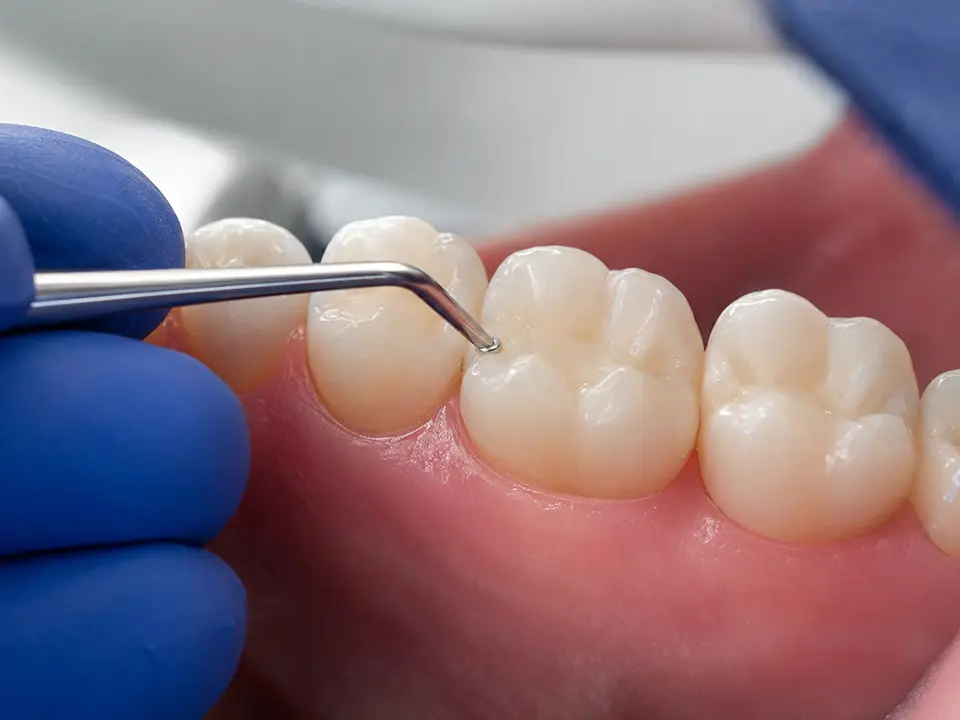
Personalized Dental Care in Chicago
Inside each tooth is a space containing nerve and blood-vessel tissue known as the pulp. Deep decay, cracks, trauma, leaking restorations, or other damage can allow this tissue to become inflamed or infected. Symptoms can include spontaneous pain, lingering sensitivity to hot or cold, pain when biting, swelling, or a darkened tooth, although some teeth have few symptoms.
Root canal treatment removes diseased tissue from inside the tooth, disinfects and shapes the internal canal system, and seals the space. The purpose is to retain the tooth when doing so is clinically appropriate. The tooth usually also needs a definitive restoration afterward to protect it and restore function.
A root canal should not be recommended from symptoms alone. Your dentist evaluates the tooth, surrounding gums and bone, existing restorations, bite, and X-rays before determining whether root canal therapy, another treatment, monitoring, extraction, or specialist referral is appropriate.
Symptoms
No single symptom proves that a root canal is necessary. A tooth can hurt because of decay, a crack, grinding, gum disease, bite trauma, sinus pressure, or other causes. However, certain patterns make evaluation especially important.
Diagnosis
Diagnosis can include a review of symptoms, clinical examination, percussion or bite testing, temperature testing, evaluation of restorability, periodontal measurements, and dental X-rays. The dentist also looks for signs of cracks, deep decay, bone changes, or other conditions that might affect the prognosis.
If the tooth is severely fractured, lacks enough remaining structure, has advanced periodontal support loss, or has another condition that prevents predictable restoration, extraction may be a more realistic option. When the case is unusually complex, referral to an endodontist may be recommended.
After Root Canal Therapy
Root canal therapy treats the internal portion of the tooth, but it does not rebuild missing outer tooth structure. Teeth that have large fillings, decay, fractures, or substantial structural loss may require a buildup and crown to protect the remaining tooth and restore the bite.
The final restoration is an important part of the overall treatment plan. Delaying it longer than recommended can expose the tooth to fracture, leakage, or other complications. Your dentist will explain what type of restoration is appropriate for your specific tooth.
Comfort & Recovery
Local anesthesia is used to numb the tooth and surrounding area. After treatment, mild tenderness when chewing can occur for a period of time, especially if the tooth was painful or inflamed beforehand. Follow the written instructions provided by the office and contact us if symptoms are worsening rather than improving.
If you develop increasing swelling, fever, difficulty swallowing, difficulty breathing, or another concerning symptom, seek prompt professional care. Life-threatening symptoms require emergency medical attention.
Insurance & Cost
Dental benefits for root canal treatment depend on the tooth, plan design, deductible, annual maximum, waiting periods, frequency rules, and other limitations. A crown or buildup may be billed separately and can have different coverage percentages.
Our team can review available insurance information and discuss estimated patient portions. CareCredit, Sunbit, cards, cash, Weave Pay, and available in-house arrangements may help patients manage treatment costs when needed.
Common Questions
You need an examination to know for sure. Lingering temperature sensitivity, spontaneous pain, pain when biting, swelling, deep decay, or changes around the root on an X-ray can be signs that the pulp is inflamed or infected, but other dental problems can cause similar symptoms.
It depends on whether the tooth can be predictably saved and restored. Saving a natural tooth can be beneficial when the tooth has adequate structure and support, but extraction may be more appropriate when the tooth is severely fractured, non-restorable, or has a poor prognosis.
Many back teeth and heavily restored teeth require a crown or another protective restoration after root canal therapy. The recommendation depends on the tooth location, remaining structure, existing restorations, bite, and fracture risk.
In some cases treatment can begin during an urgent visit, while other situations require a separate appointment or referral. The first priority is an accurate diagnosis and a treatment plan appropriate for the tooth and your health.
Many dental plans include root canal therapy as a covered major or basic service, but deductibles, percentages, waiting periods, annual maximums, and plan exclusions vary. The final restoration may have separate benefits.
Full Smile Family Dentist is located at 3939 W. Fullerton Ave in Chicago. Call (773) 235-0000 to ask about evaluation and appointment availability.
Related Care
Custom crowns can strengthen, protect, and restore teeth affected by large fillings, fractures, or extensive decay.
Explore Dental Crowns →Call for pain, swelling, a broken tooth, trauma, infection concerns, or questions about same-day emergency availability.
Explore Emergency Dentistry →When a tooth cannot be predictably restored, an extraction may be recommended with clear aftercare instructions.
Explore Tooth Extractions →Plan Your Visit
Review accepted insurance information and explore Sunbit, CareCredit, secure online payments, and other available ways to manage dental treatment costs.
Plan Your Visit
Book a visit or call our Chicago office. We can evaluate the tooth, review X-rays when appropriate, and explain whether root canal treatment, restoration, extraction, monitoring, or referral is recommended.